From News Desk
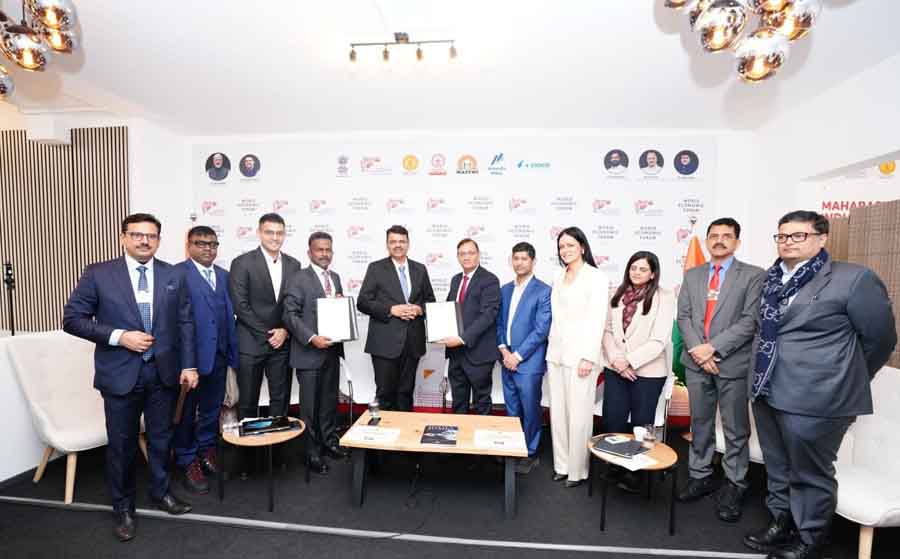
On January 20th, the Government of Maharashtra, together with project developer Novel Biofuels and global infrastructure origination organisation ACTUAL, signed an MoU for the development of a Bamboo-to-Biomethanol renewable fuels platform in eastern Maharashtra.
This is a strategic partnership between the Government of Maharashtra, Mumbai developer Novel Biofuels and San Francisco-based co-developer ACTUAL to supply sustainable shipping and aviation markets, positioning India as a critical exporter of energy security and low-carbon fuels.
At full scale, the facility will be able to convert approximately 3 million tonnes per year of sustainably managed bamboo feedstock into biomethanol, positioning Maharashtra – and India – as a competitive global supplier of low-carbon fuels into energy-intensive sectors that underpin global trade and industrial growth.
“Maharashtra’s vision is clear – the energy transition must create economic depth, not just emissions reduction. This project demonstrates how renewable energy, rural livelihoods and global industrial demand can be integrated into a single, bankable system. By transforming bamboo into a globally traded clean fuel, we are anchoring farmers at the foundation of industrial growth and positioning Maharashtra as a trusted supplier in the world’s new energy value chains,” said Devendra Fadnavis, Chief Minister of Maharashtra.
“Bamboo is not simply a feedstock for this project – it is the structural foundation of the entire system. When organised into long-term, investable supply chains, bamboo becomes infrastructure – enabling carbon removal, delivering stable incomes for marginal farmers and forestry communities; and supplying scalable clean fuels to global shipping and aviation markets,” said Dinesh Sharma, Founder and CEO, Novel Biofuels.
“Bamboo is not an input to this project; it is infrastructure. When you design bamboo into long-term contracts, forestry governance, logistics systems and global offtake frameworks, it transforms from an agricultural crop and starts functioning as energy infrastructure. That shift is what makes projects bankable at scale. In Maharashtra, we are transforming environmental assets into industrial reliability, anchoring farmers, stabilising supply; and linking rural landscapes directly to global fuel markets. This marks the inflection point where clean energy moves beyond technology deployment and becomes the design of bankable, resilient systems built to last,” said Aurora Chiste, Head of Strategic Origination, ACTUAL
Central to the project is an institutionalised feedstock model that integrates farmers, forest communities and long-term forestry rights into a structured, bankable supply system. Through long-duration contracts, price-stability mechanisms and local aggregation frameworks, bamboo is transformed from an underutilised resource into a strategic industrial input, effectively treating feedstock as infrastructure. This creates predictable income streams for rural communities while ensuring secure, resilient supply for global fuel markets.
By embedding farmers and forestry governance directly into the energy value chain, the project aligns rural participation with industrial scale, linking land, labour and capital within a single coordinated system, setting farmers in a foundational role in India’s new energy future.
Disclaimer – Views are those of the spokespersons and this website doesn’t necessarily endorse them. Readers are urged to use their own discretion while making a decision about using this information in any way. There has been no monetary benefit to the Publisher/Editor/Website Owner for publishing this post and the Website Owner takes no responsibility for the impacts of using this information in any way.


 News and Opinions...