
From News Desk
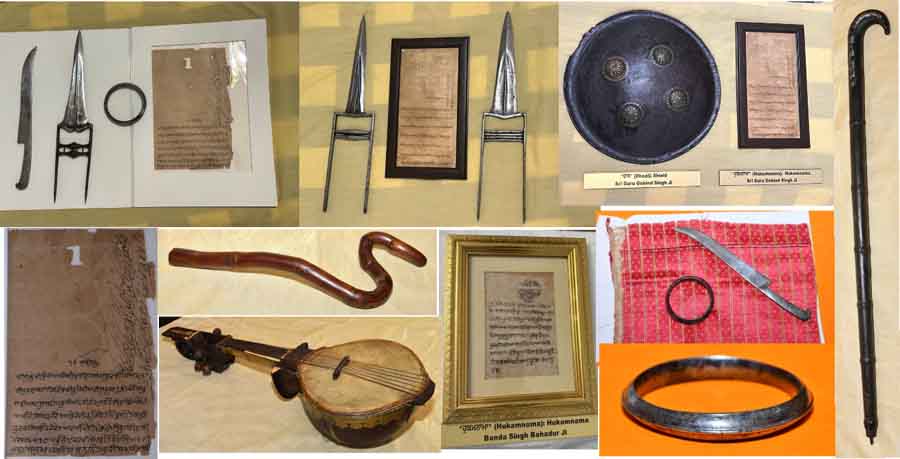
A remarkable collection of rare and sacred Sikh artifacts, spanning the era of the 15th and 16th century Sikh Guru Sahiban and prominent Sikh historical figures, received global scholarly attention following a special visit today by Dr Satpreet Singh, a US-based sustainability scientist, researcher and cultural advocate. Dr Singh, accompanied by his wife Rupinder Kaur and children, visited the ancestral home of Bhai Buta Singh Ji, the 13th-generation descendant of Bhai Roop Chand Ji, in the Malwa region of Punjab.
Located in Village Bhai Roop Chand Ji, named after the revered Sikh figure Bhai Roop Chand Ji, the home safeguards an extraordinary lineage of artefacts personally bestowed by the Sikh Gurus. The visit marks a significant moment in cultural documentation, heritage conservation and global recognition of Sikh material history.
A Sacred Lineage – The Legacy of Bhai Roopa Chand Ji
Village Bhai Roop Chand Ji holds unique historical importance within Sikh heritage. Bhai Roop Chand Ji, a prominent and devoted Sikh of Sri Guru Hargobind Sahib Ji, was honored by the Guru with the name “Roopa,” symbolising that he was the Roop—the reflection or mirror—of the Guru himself.
This spiritual and personal bond resulted in an extraordinary repository of sacred relics, manuscripts and artefacts entrusted to Bhai Roop Chand Ji’s family. These items have been safeguarded with devotion across 13 generations, most recently under the stewardship of Bhai Buta Singh Ji.
During recent visit, Dr Satpreet Singh and his family were welcomed by Bhai Gurpreet Singh Ji (14th generation of Bhai Rupa Ji), Bhai Gurbakshish Singh Ji (15th generation of Bhai Rupa Ji) and Bhai Balbir Singh Ji, who meticulously explained the provenance, lineage and preservation practices associated with each artefact.
An Unparalleled Collection of Sikh Heritage
The home of Bhai Buta Singh Ji preserves one of the most extensive private collections of Sikh artefacts known in Punjab. Many items trace back directly to several Sikh Gurus and eminent historical personalities.
Notable artefacts viewed during the visit include –
1. Historic “Rath” (Chariot)
A rare and preserved rath on which –
• Guru Amar Das Ji
• Guru Ram Das Ji
• Mata Ganga Ji
• Guru Hargobind Sahib Ji have travelled.
The chariot stands as a tangible reminder of Sikh mobility, leadership and the tradition of personal engagement between the Gurus and their Sikhs.
2. Handwritten Hukamnamas
The collection contains original hukamnamas (royal edicts/blessings) written by –
• Sri Guru Gobind Singh Ji
• Mata Sahib Kaur Ji
• Mata Sundar Kaur Ji
• Baba Banda Singh Bahadur Ji
These manuscripts, preserved for centuries, carry immense spiritual, historical and linguistic significance.
3. Weapons and Personal Articles of the Sikh Gurus
Among the most treasured items presented were –
• Khunda (ceremonial implement) of Sri Guru Ram Das Ji
• Kara (iron bangle) of Sri Guru Tegh Bahadur Sahib Ji
• Dhal (shield) associated with Sri Guru Hargobind Sahib Ji and Sri Guru Gobind Singh Ji
• Sri Sahibs (ceremonial swords) belonging to the Gurus
• Additional rare articles connected to the Guru Sahiban and prominent Sikh figures
4. The Rabab of Sri Guru Arjun Sahib Ji
A historically significant rabab, believed to be connected with the musical and spiritual tradition established by the Gurus, was also showcased. This instrument represents the rich legacy of kirtan, devotion, and the embodiment of divine poetry.
5. Artefacts of Baba Banda Singh Bahadur & Baba Budha Sahib Ji
The home also safeguards relics associated with –
• Baba Banda Singh Bahadur, the great Sikh warrior and martyr
• Baba Budha Sahib Ji, one of the foundational figures of early Sikhism
The collection together paints an extraordinary narrative of Sikh sovereignty, spirituality and societal transformation spanning several centuries.
A Visit Rooted in Scholarship, Sustainability and Cultural Preservation
Dr Satpreet Singh, who traveled from the United States, expressed deep appreciation for the family’s enduring commitment to heritage preservation. As a scientist working on global sustainability, Dr Singh emphasised the importance of conserving cultural and historical assets as part of holistic community sustainability frameworks.
He remarked that heritage conservation is not only a cultural necessity but also an environmental and social one, ensuring that traditional knowledge systems, identity and collective memory continue to guide future generations.
“Standing in the ancestral home of Bhai Roopa Ji, surrounded by centuries of Sikh history, is a profoundly humbling experience. This collection is not simply a set of artefacts; it is a living testimony of devotion, sacrifice and the spiritual depth of Sikh heritage. I commend the family of Bhai Buta Singh Ji for preserving these treasures with such love and integrity,” Dr Singh said.
Mrs Rupinder Kaur, MBA and General Manager at ARDASS Corporation, also praised the meticulous care and inter-generational commitment to preservation, noting the importance of safeguarding cultural assets for future generations of Sikhs worldwide.
The Custodians of a Living Museum
During the visit, Bhai Gurpreet Singh Ji and Bhai Balbir Singh Ji personally guided Dr Singh’s family through the preserved items. They shared detailed oral histories describing how each artifact entered the family’s care, how they were passed down through each generation; and the traditional methods used to protect them.
For generations, the family has maintained these items as sacred trusts rather than historical curiosities. Their efforts include –
• Safeguarding manuscripts from moisture and temperature damage
• Caring for metal weapons and artifacts through traditional maintenance
• Preserving wood-based items, such as the historic rath, with natural techniques
• Holding regular recitations and ceremonies to honor the spiritual value of the relics
The custodians also expressed their commitment to ensuring that future generations of the family and the broader Sikh community continue to benefit from this priceless legacy.
Cultural Significance for Punjab and the Global Sikh Community
The village of Bhai Roop Chand Ji, often known for its roots in Sikh history, plays a critical role in retaining the tangible heritage of the Sikh Gurus. The artefacts preserved here give scholars rare, direct access to the material culture of early Sikh history—an area where physical relics are historically scarce due to conflict, displacement and colonial interventions.
Dr Singh emphasised that these artefacts provide invaluable data for researchers in fields such as –
• Sikh studies
• Religious history
• Anthropology
• Conservation science
• Material culture studies
He also highlighted the need for collaborative preservation initiatives between heritage families, Sikh institutions, conservation experts and global Sikh diaspora organisations.
Strengthening Heritage Infrastructure for Future Generations
The historic visit also sparked discussions about long-term preservation strategies. Dr Singh suggested potential pathways for safeguarding the artefacts, including –
• Establishing advanced conservation facilities in Punjab
• Digitising manuscripts and artifacts for global academic access
• Providing training for families preserving ancestral relics
• Documenting oral histories connected to Sikh lineages
• Encouraging partnerships with universities and museums under cultural respect protocols
The family’s willingness to share their heritage with scholars is seen as a progressive step toward both safeguarding and celebrating Sikh identity on a global scale.
Disclaimer – The details expressed in this post are from the companies responsible for sending this post for publication. This website doesn’t endorse the details published here. Readers are urged to use their own discretion while making a decision about using this information in any way. There has been no monetary benefit to the Publisher/Editor/Website Owner for publishing this post and the Website Owner takes no responsibility for the impacts of using this information in any way.
 News and Opinions...