
From News Desk
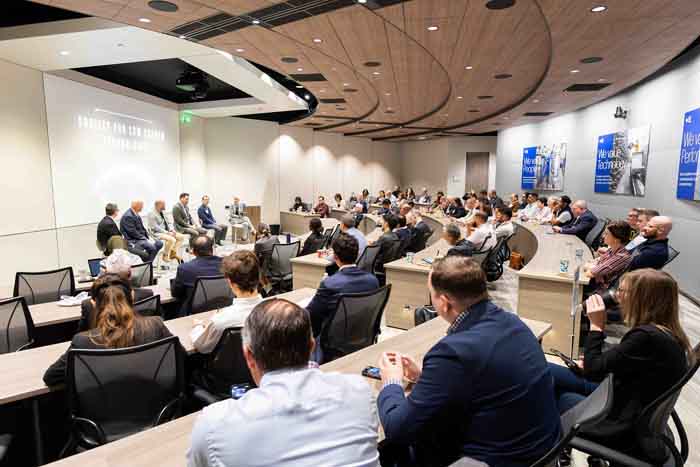
The Society for Low Carbon Technologies (SFLCT) is offering students direct, high-impact opportunities to engage with those shaping tomorrow’s energy systems, in addition to deploying scholarships globally, including at Texas A&M University.
Now it is going one step further with this model via a recent SFLCT event and panel session hosted by SLB titled “Powering the Future via Geothermal, Lithium Extraction and Battery Storage.” This is where university students from Rice University and Lone Star College – CyFair were invited to engage directly with an audience of industry leaders and expert speakers from key organizations, including Equinor, Vallourec, TerraVolta, NOV, TerraFlow Energy, and SLB New Energy, with one student selected to deliver the closing remarks.
Notably, the low-carbon organisation believes that these experiences directly expand knowledge beyond classroom settings. A case in point is Alexander H Garcia, an undergraduate at Rice University studying global affairs and cognitive science. Recognised for his commitment to interdisciplinary energy and public policy work, he was invited to deliver the closing remarks, reflective of SFLCT’s “Immersion-to-Impact” model.
Garcia notes how speaking as a 19-year-old is catalytic in building student credibility with industry, expanding professional networks, developing real-world fluency, and gaining speaking experience. Through this, SFLCT is building the talent pipeline of change agents for the future at no cost to educational systems or to the students themselves. This approach moves well beyond traditional financial support by providing ethical access unavailable via scholarships alone.
“We will continue creating platforms for students to vocalize their vision to industry-leading organizations and audiences, mobilizing action and surpassing the impact of conventional scholarships,” shared SFLCT’s Chairman of the Board, Fernando C Hernandez. He notes how SFLCT sensibly accelerates knowledge in new domains that would otherwise take months to years to develop via coursework pursued solely in academic settings, while emphasizing that all sources of knowledge are critical.
By extending this learning into real-world settings, placing students in the room with practitioners navigating complex regulatory frameworks, emerging technologies and dynamic policy environments, they gain first-hand exposure to the conversations that define not only technological innovation but also the technical, regulatory and economic trajectory of such innovation.
Disclaimer – The details expressed in this post are from the companies responsible for sending this post for publication. This website doesn’t endorse the details published here. Readers are urged to use their own discretion while making a decision about purchasing or using a product/service related to this company, or using this information in any way. There has been no monetary benefit to the Publisher/Editor/Website Owner for publishing this post and the Website Owner takes no responsibility for the impacts of purchasing or using these products/services on the reader, or using this information in any way.
 News and Opinions...