
From News Desk
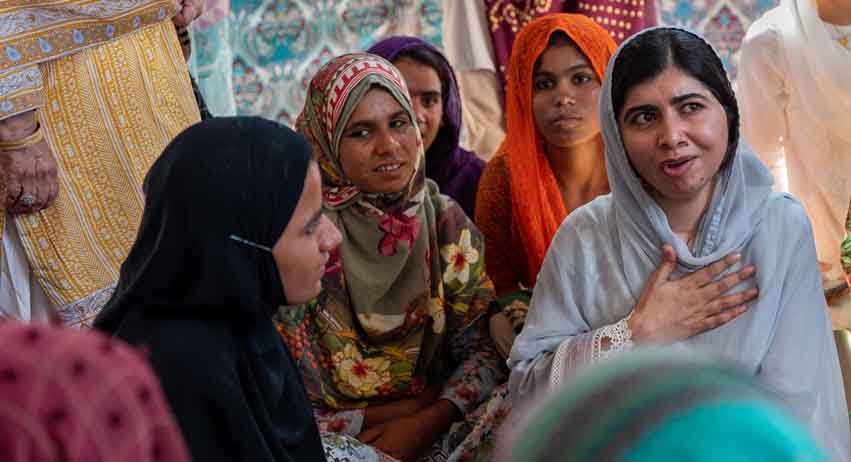
21 organisations in Pakistan, Nigeria, Brazil, Ethiopia, Tanzania join Malala Fund’s Education Champion Network to address barriers keeping girls from school.
Malala Fund has announced USD 4.8 million in new grants for 21 organisations advancing girls’ education in Nigeria, Pakistan, Brazil, Ethiopia and Tanzania. In line with the organisation’s 2025–2030 strategy, 66% of this funding (about USD 3.17 million) will support young women-led organisations — more than triple Malala Fund’s original target.
“I am incredibly proud that most of the funding we are awarding under our new strategy is going to organizations led by young women,” said Malala Yousafzai, Co-Founder and Executive Chair of Malala Fund. “From reducing the cost of books and transport for girls in rural Pakistan to ensuring married girls and young mothers in Nigeria can complete secondary school, our partners are leading the fight for girls to learn, even under the toughest circumstances.”
Malala Fund’s Education Champion Network (ECN) supports civil society organisations working to advance girls’ education and influence policy change and implementation in their countries. The new cohort of ECN grantee partners will address urgent threats — from child marriage and conflict to systemic gender and racial discrimination and shrinking education budgets — across five countries that together are home to 31 million out-of-school girls.
“Our partners are closest to the challenges holding girls back and are delivering bold, practical, systemic solutions so girls can get the education they deserve,” said Lena Alfi, CEO of Malala Fund. “With girls’ rights under pressure and resourcing slipping worldwide, the smartest investment we can make is in the young women and seasoned activists who know exactly how to defend them.”
Malala Fund prioritises flexible, multi-year grants so that partners can devote resources to where they’re most needed — from policy advocacy and budget transparency to safe-school initiatives, re-entry policies for young mothers and the elimination of hidden school costs.
The new cohort of grantees will work to –
Nigeria – Scale gender-responsive budgeting, transparency and citizen oversight; support school re-entry for married and pregnant girls; and deploy digital tools that track education spending and infrastructure gaps.
Pakistan = Address the hidden costs (such as transport, materials and uniforms) of girls attending school; restore flood-damaged schools; recruit female teachers; and build accountability for gender-responsive local budgets.
Brazil – Advocate for gender- and race-responsive education plans; make menstrual dignity laws a reality in schools; and strengthen sexual health and anti-violence programming so girls can stay in school.
Ethiopia – Advance national and regional adoption of the Safe Schools Declaration; train teachers and local officials on gender-based violence prevention; and create safe spaces and provide psycho-social support in conflict-affected areas.
Tanzania – Strengthen re-entry policies for young mothers; expand gender-based violence reporting in schools; and support legal reforms to set 18 as the minimum age of marriage with no exceptions.
Disclaimer – The details expressed in this post are from the companies responsible for sending this post for publication. This website doesn’t endorse the details published here. Readers are urged to use their own discretion while making a decision about using this information in any way. There has been no monetary benefit to the Publisher/Editor/Website Owner for publishing this post and the Website Owner takes no responsibility for the impacts of using this information in any way.
 News and Opinions...