
From News Desk
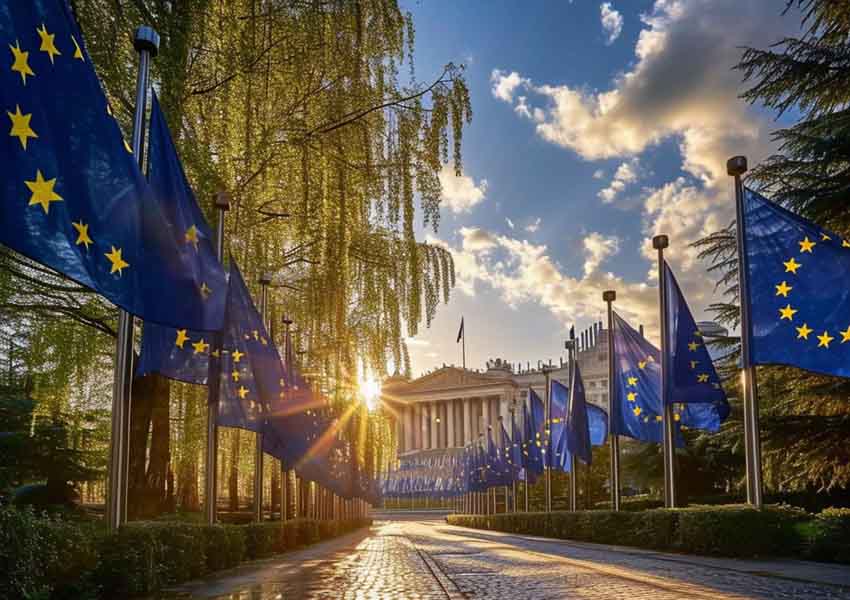
The European Union and the Republic of Uzbekistan have signed an Enhanced Partnership and Cooperation Agreement (EPCA), marking a significant milestone in strengthening bilateral relations. It marks an important deepening of regional ties, elevating them to a new level of strategic cooperation following the EU-Central Asia Summit held on 4 April in Samarkand, Uzbekistan.
President of the European Commission, Ursula von der Leyen said, “In Samarkand, we made a commitment to deepen our relations with Central Asian countries. Today we are delivering on that commitment, by reinforcing our long-standing relationship with Uzbekistan. The Enhanced Cooperation and Partnership Agreement provides a framework for Uzbekistan and the European Union to work together for the mutual benefit of our citizens. It is the moment to consolidate an already strong partnership.”
The agreement establishes a new legal basis for reinforcing political dialogue and deepening cooperation in many mutually beneficial areas. These include trade and investment, sustainable development and connectivity, intellectual property, research and innovation, education, environment and climate change, as well as rule of law, human rights, and civil society. It also strengthens cooperation in foreign and security policy, encompassing conflict prevention and crisis management, risk reduction, cybersecurity, regional stability, disarmament, non-proliferation, arms control; and export control.
The agreement opens opportunities for collaboration in new areas such as critical raw materials essential for the green and digital transitions, building on the Memorandum of Understanding signed between the EU and Uzbekistan in 2024. It also supports enhanced regional connectivity, including through the Global Gateway initiative and the Trans-Caspian Transport Corridor.
Through the signing of the EPCA, the EU and Uzbekistan reaffirm their dedication to the principles and norms of international law, and to bolstering peace, stability, and security through effective multilateralism.
The EU and Uzbekistan also announced the conclusion of their bilateral negotiations on market access on services and goods. This is a significant milestone in Uzbekistan’s ongoing accession process to the World Trade Organization (WTO). It underscores the EU’s political support for Uzbekistan’s WTO accession and the underlying economic reform process, as well as for a rules-based multilateral trading system with the WTO at its core. The bilateral EU-Uzbekistan deal includes Uzbekistan’s commitments on maximum tariff rates for import and export of goods and Uzbekistan’s concessions in services. These commitments and concessions will be embodied in the future Protocol of Accession of Uzbekistan to the WTO.
Disclaimer – The details expressed in this post are from the companies responsible for sending this post for publication. This website doesn’t endorse the details published here. Readers are urged to use their own discretion while making a decision about using this information in any way. There has been no monetary benefit to the Publisher/Editor/Website Owner for publishing this post and the Website Owner takes no responsibility for the impacts of using this information in any way.
 News and Opinions...