
From News Desk
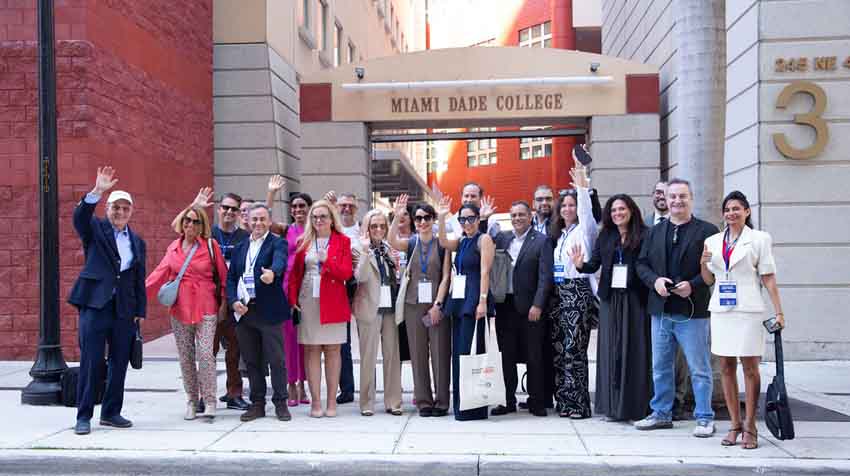
Smart City Expo Miami 2025, its 6th edition, brought together more than 350 participants and speakers from 20+ countries to explore what it truly means to reimagine urban spaces. Across keynotes, panels and presentations at Miami Dade College’s AI Lab, a clear message emerged – technology alone won’t build better cities; people will – echoing the Expo’s theme of “re-imagining urban spaces.”
Designing Cities That Include Everyone
Barcelona’s Honorata Grzesikowska, CEO of Urbanitarium, opened with a challenge to rethink how cities shape our emotions and sense of belonging.
“Spaces don’t just hold us, they mould us,” she said, urging urbanists to adopt intersectional design that measures how people feel, not just how they move.
In a similar spirit, Alex Norman of Miami’s Access Built reframed accessibility as an opportunity, not an afterthought. “Friction is the tax we all pay for bad design, ” he noted. “Flow is the dividend we all share when design is inclusive. ” His message landed clearly: when we design for the margins, everyone benefits.
From Scotland, May East asked a provocative question – What if women designed the city? Citing megatrends in urbanisation, gender and decarbonisation, she called for “nature-positive and gender-sensitive” design. “Don’t use an old map to explore new territory,” she said, inviting collaboration between men and women to build cities that serve all.
Governance, Engagement and the Power of Community
Governance took centre stage with Dr Jonathan Reichental, who described today’s “cognitive industrial revolution” as an opportunity to rethink how cities make decisions.“The things we want to achieve are not limited by technology anymore, ” he said. “Innovation is now everyone’s job.”
Raimundo Rodulfo, CIO, Coral Gables, shared a blueprint for engaging citizens at every stage, from ideation to implementation. His city’s TechTank incubator and Smart City Lab are bridging talent gaps while involving residents through advisory boards and open data tools. “Engagement isn’t a box to check, it’s the engine of innovation,” he said.
That spirit of co-creation was echoed in Port St. Lucie’s panel on civic innovation. Deputy City Manager Kate Parmelee and her team described how human-centered design has transformed their city planning process. Through citizen summits and prototyping sessions, they’ve turned residents into collaborators – even co-creating solutions for protecting green space.
Miami Dade College President Madeline Pumariega underscored the importance of regional thinking and talent development in sustaining innovation. “We’ve always believed talent isn’t just a vertical, it’s across everything, ” she said, pointing to AI training for 500 faculty members and partnerships with startups to strengthen South Florida’s workforce.
Angela Betancourt, founder of the Betancourt Group, reminded attendees that great communication is foundational to great governance. Her VOICE framework – Vision, Outcome, Information, Community, Empathy – offers a model for building trust from the ground up.
Technology with Purpose
From Kyiv, Anatolii Vovniuk shared how a single city app became a lifeline during crisis – a platform that unified services for 3 million residents amid air raids. “Don’t wait for a crisis to build systems that truly serve people, ” he cautioned, emphasizing transparency and simplicity as cornerstones of trust.
Meanwhile, Dr Asma Mehan of Texas Tech University looked at how industrial transitions are reshaping cities like Turin and Detroit, from post-oil futures to cultural reinvention. Jake Taylor of Urban Innovators Global explored the experience economy, warning that efficiency can’t be the only metric for success. “Efficiency is the death of experience, ” he said, calling for experiential urbanism that restores emotion and meaning to public life.
Happiness, Climate and Culture Change
What good is a smart city if it’s not a happy one? That was the question posed by Luis Miguel Gallardo, founder of the World Happiness Foundation. He outlined nine dimensions of city happiness and urged leaders to embed well-being metrics alongside GDP and emissions data. “The smartest cities,” he said, “are the ones that put people’s happiness first.”
Addressing the climate clock, Sweta Gupta of Gridless Global pushed for decisive action on decarbonisation, while Andy Boenau from the City of Richmond, Virginia outlined how culture change – not just infrastructure – drives safer, greener mobility.
Recognising Leadership in Action
The day closed with the Sustainability Impact Awards, celebrating individuals and projects driving meaningful progress around the world –
● Book of the Year: The Art of the New Urbanism, by Charles C. Bohl and JamesDougherty
● Recognition of Tech Innovation Delivering Measurable Sustainable Outcomes: José Antonio Ondiviela, distinguished expert in smart city strategies and
human-centered urban development
● Advancing Regenerative Design: Anne Vanner, British architect setting a high standard for professional practice
● Sustainable Impact Award for Education: Madeline Pumariega, President, Miami Dade College
● Sustainable Impact Award for Community Building: Luis Miguel Gallardo, Founder & President, World Happiness Foundation
Day 1 proved that future-ready cities are already taking shape – built on inclusion, collaboration and a shared commitment to reimagining urban space.
Disclaimer – The details expressed in this post are from the companies responsible for sending this post for publication. This website doesn’t endorse the details published here. Readers are urged to use their own discretion while making a decision about using this information in any way. There has been no monetary benefit to the Publisher/Editor/Website Owner for publishing this post and the Website Owner takes no responsibility for the impacts of using this information in any way.
 News and Opinions...