
From News Desk
With 2.6 billion people still offline worldwide, Saudi Arabia is working with the International Telecommunication Union (ITU) to accelerate universal connectivity from a projected 13 years down to just five. This bold step reflects the Kingdom’s growing role in unifying global efforts for a sustainable digital future through strategic partnerships and international initiatives.
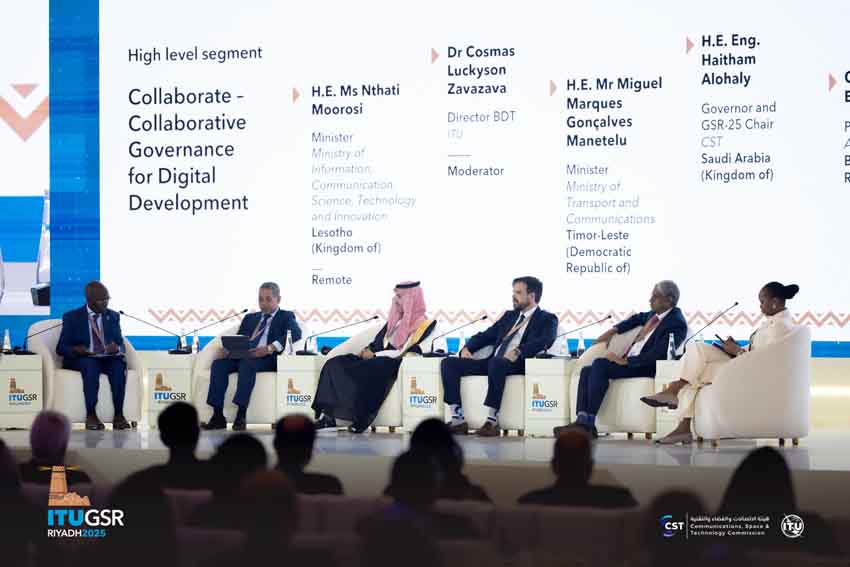
Haytham AlOhali, Acting Governor of CST, emphasised this commitment by stating, “To make digital transformation inclusive, we collaborate with regulators worldwide to create a more innovative and cooperative digital ecosystem. By turning regulation into a driver of enablement, transparency, and the adoption of emerging technologies, we aim to strengthen both regional and global collaboration through guidelines that reflect best regulatory practices.”
This vision was most recently showcased at the Global Symposium for Regulators (GSR25), hosted in Riyadh, where Saudi Arabia and the ITU convened policymakers, regulators, and industry leaders from around the world. During the symposium, the Kingdom introduced pioneering initiatives such as the Digital Sustainability Toolkit and advanced discussions on bridging the digital divide, underscoring its leadership in aligning global efforts toward inclusive and sustainable digital transformation.
The Kingdom has prioritised the ICT sector as a key driver of economic and social development. This focus is reflected in its growing partnership with the ITU, where Riyadh actively promotes global dialogue on inclusive digital transformation, bridging the digital divide, and ensuring the sustainability of digital infrastructure.
Among Saudi Arabia’s notable achievements domestically and internationally, the Open Access initiative exceeded its target by connecting over 3.9 million homes to fiber-optic networks, enhancing high-speed connectivity and creating a conducive environment for the digital economy. National digital workforce capacity has grown to more than 380,000 professionals, up from 150,000 in 2018, with female participation reaching 35%, surpassing the G20 average.
On the international front, Saudi Arabia collaborated with the ITU to launch the “AI Readiness Framework,” aimed at supporting countries in adopting AI solutions safely and inclusively. Additionally, the Kingdom introduced the “Digital Sustainability Toolkit,” the first global framework helping governments balance technological advancement with environmental protection. These initiatives earned recognition from the ITU, which described Saudi Arabia as a “strategic partner shaping the global digital future.”
The Kingdom has also addressed global internet connectivity challenges, noting that while approximately 200 million people connect to the internet each year, 2.6 billion remain offline. Through its partnership with the ITU, Saudi Arabia is accelerating international efforts to connect these populations in under five years, instead of the previously projected 13, thereby reducing the digital divide and promoting digital equity.
Furthermore, Saudi Arabia supports international dialogues on digital sustainability, including space debris management, and promotes a circular digital economy through initiatives for recycling electronic devices, reducing the environmental impact of modern technologies.
Disclaimer – The details expressed in this post are from the companies responsible for sending this post for publication. This website doesn’t endorse the details published here. Readers are urged to use their own discretion while making a decision about using this information in any way. There has been no monetary benefit to the Publisher/Editor/Website Owner for publishing this post and the Website Owner takes no responsibility for the impacts of using this information in any way.
 News and Opinions...