
Ashish P Dhakan
The author is MD and CEO, Prama Hikvision India
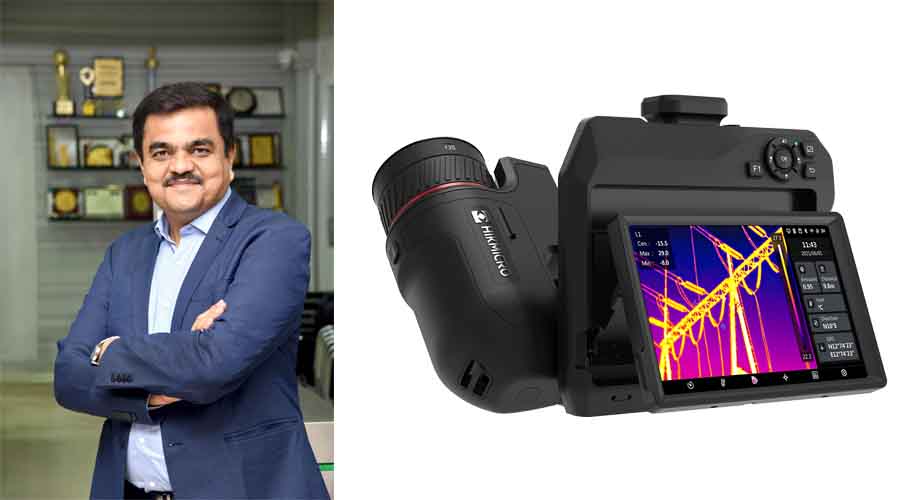
As most electricians know, heat is the byproduct of an operating electrical circuit. Excessive heat is also a way for service technicians to identify any hot spots and potentially dangerous electrical faults. These faults can increase costs through equipment failure, additional repairs and service interruptions for business or related facilities.
for service technicians to identify any hot spots and potentially dangerous electrical faults. These faults can increase costs through equipment failure, additional repairs and service interruptions for business or related facilities.
Electrical Fault Dynamics
An electrical fault is an abnormal condition that alters voltage or current. For example, it can be a loose connection, damaged insulation, or a buildup of debris. Because current flow naturally generates heat, faults can create thermal hazards which cause property damage and interrupt normal operations.
Severity of a fault is categorised by how far the current temperature rises above a reference temperature or a comparable location under the same load. As the temperature difference increases, so do energy and repair costs and the risk of fire. These electrical systems are extremely powerful and need routine inspections to ensure reliability, reduce maintenance costs, and operate safety.
With larger facilities, there is a greater risk for catastrophic failures, resulting in fire damages that can cost hundreds of thousands of dollars to repair — if not more.
By adding a thermal imaging camera to your tool bag, you can find and address these issues in a safe and cost-effective manner. In traditional inspection, technicians rely on visual inspections during outages. This is a slow and expensive process and often there isn’t even a visible indication of failure until it’s too late.
How Can Thermography Help?
Without thermal imaging technology, searching for electrical faults requires direct contact or hands-on testing. Electric power to equipment that needs inspection is turned off, which can negatively impact business operations, especially if a company relies on this circuit for its power source or datacentre.
Thermography allows field professionals to step back — literally — and inspect from outside the NFPA-restricted approach boundary. While some cabinets and equipment may still need to be opened to provide line of sight for measurements, thermal cameras themselves do not require direct contact. With IR Windows, thermographers can view components without opening cabinets, enabling much faster and safer inspections.
Thermal cameras also do not require de-energising of equipment; at least a partial load is necessary to measure any heat discrepancies that indicate an electrical fault. Because of this, thermography reduces potential losses for production or service interruptions during inspection.
Thermal cameras collect visual as well as data points, which lets technicians show customers the severity of their electrical problems. Technicians can use this collected information to support repair requests and verify that their work has solved the issue. Improved documentation also builds historical data for future analysis. Maintenance personnel can track more details for problem items across multiple scheduled inspections.
How Are Thermal Cameras Used for Inspections?
The key to using thermal cameras for inspection of electrical systems is accurate measurement of temperatures and comparison. Comparison alone will give you a good idea of areas to inspect further and measurements will allow you to classify the severity of the fault. To determine severity a technician will compare measurements from the component in question to a similar one under the same load.
Another common metric is to measure the temperature rise above ambient. Important parameters to set for accurate measurement are the emissivity (how reflective the surface is), background temperature and distance. If you’re viewing connections through an IR Window you would also need to input the window transmission. Most standards for thermal inspection include information on acceptable limits, safety protocols and other requirements to ensure reliability. While thermal cameras cannot completely replace the need for visual and contact inspections, they can help pinpoint where in the system, these types of inspections are warranted. Thermography provides maintenance staff the information they need for early detection and for prioritising repairs, which in turn saves money. These exceptional tools can improve safety, reliability, efficiency and costs.
Thermal imaging cameras can help identify electrical faults by detecting temperature anomalies, allowing for early intervention and prevention of equipment failure. A step in time can save the cost incurred due to equipment failure, additional repairs and service interruptions.
 News and Opinions...