
From News Desk
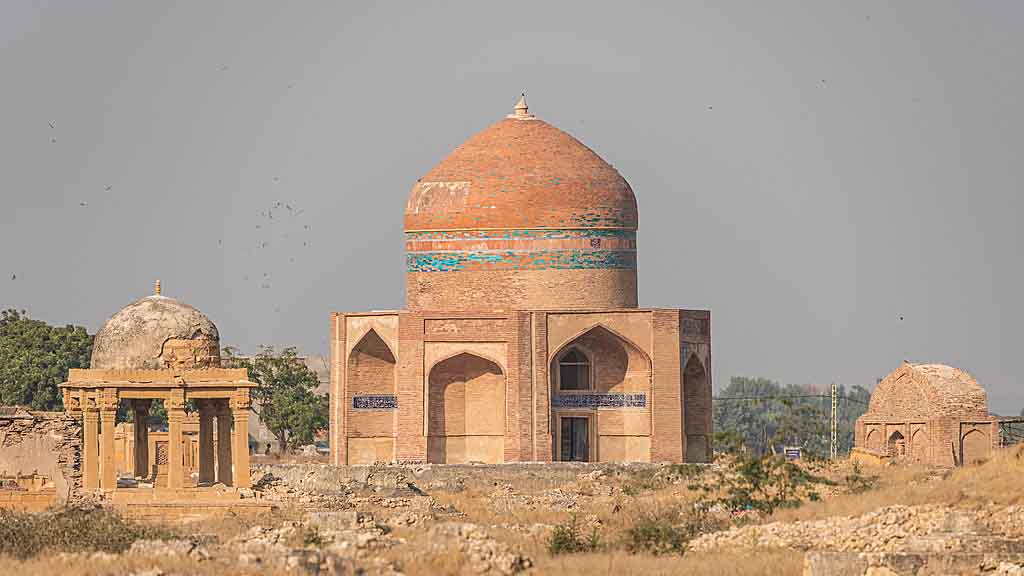
Tomb of Sultan Ibrahim/A Savin, Wikipedia
A 3 days workshop was organised by UNESCO to focus on enhancing the knowledge and understanding on major heritage management topics, ensuring authenticity in restoration projects, and ethical considerations of authenticity, reversibility and minimum intervention. The workshop also provided an opportunity to share the best practices and experiences with the professionals from the Directorate of Antiquities and Archaeology, Sindh.
Makli Necropolis, located near Thatta in Pakistan’s Sindh province, is among the largest and most extraordinary funerary sites in the world. Situated around 140 kilometers from Karachi, this necropolis is one of the largest burial quarters in the world with graves, tombs and mausoleums of saints, poets, noblemen, governors, princes, kings and queens. Extending over 10 square kilometers, the Historical Monuments at Makli, Thatta possess around half a million tombs and graves. The architectural styles reflect a rich confluence of Muslim, Hindu, Persian, Mughal and Gujarati influences. These tombs are particularly renowned for their distinctive, blue-glazed tiles, intricate stone engravings, refined calligraphic inscriptions and enchanting geometric motifs, testifying to the creative and spiritual expressions of vibrant civilization that once flourished in the region.
Thatta being a thriving center of knowledge, arts and culture from 14th to 17th centuries, played a pivotal role in shaping the cultural heritage of the Sindh region. In recognition of its exceptional universal value and artistic legacy, the Makli Necropolis was inscribed as a UNESCO World Heritage Site in 1981.
Over the past few decades, the site has faced natural and human hazards. In response, UNESCO has been working closely with the Government of Sindh, to provide technical support in addressing conservation and management issues, deploying reactive monitoring missions and executing conservation and capacity building initiatives. Following the damage caused by the 2022 monsoon, UNESCO mobilized local and international experts, within the framework of World Heritage Emergency Assistance, to undertake damage assessments, capacity building initiatives and immediate remedial measures for emergency stabilization of the site.
The impact assessment revealed severe structural vulnerabilities in the Shaikh Jyio Tomb and an adjacent unknown tomb from the Samma period (1351–1524). To address these critical issues, UNESCO initiated a restoration project under the Netherlands Funds-in-Trust, in collaboration with the Directorate of Antiquities and Archaeology, Sindh.
 News and Opinions...
