
From Editorial Desk
Dr Archana Verma
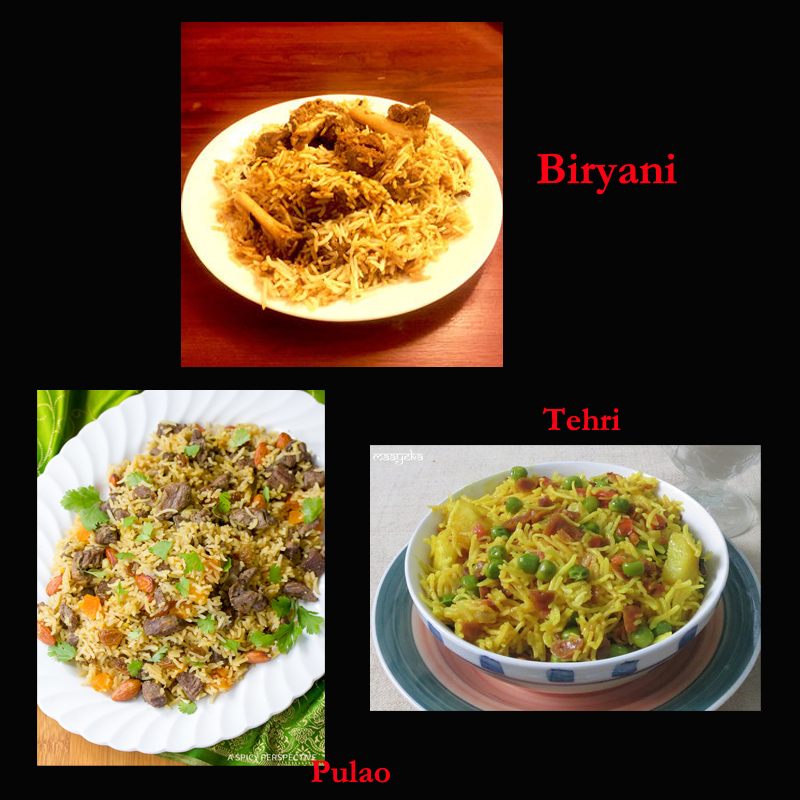
Biryani, Pulao and Tehri are three dishes made with rice and there are many versions of them across South, West and Central Asia. Hence, many people, including chefs and home cooks even in these regions confuse between them and are not able to distinguish one from the other. Nowadays, with improvised cooking methods, three of them have also come closer to each other. However, a student of cuisine cultures should understand the difference between them.
The very first difference is in their origins. This also leads to the difference in their ingredients and cooking methods. Pulao (or Pilaf) is essentially from Central Asia and West Asia, from where it came to India. It pre-dates the other two rice dishes being studied here. Contrary to the popular misconceptions, Biryani is not an import from Central or West Asia into India. It’s indigenous to South Asia, invented in the imperial Mughal kitchen, often attributed to the very talented Mughal Empress Nur Jahan. This is why almost every region and every community in South Asia has its own version of Biryani. Tehri is essentially the Indian vegetarian improvisation on Pulao, but later non-veg versions of it also evolved.
The origins of the three dishes lead to their different basic ingredients and cooking methods, on which different regional variations have overlayed their own improvisations.
Pulao – Since it is originally from Central and West Asia, ideally, it shouldn’t have powdered Indian spices, but only whole-grained ones in moderate quantity. Turmeric powder should be used only in meagre amount, just a pinch being sufficient. Similarly, chilli and black pepper should be either not used or used in meagre amounts. Both raw rice grains and meat are fried in ghee (clarified butter), butter or another cooking oil before being cooked together in water or meat stock. Whole dry fruits are also used while cooking rice and meat together.
Tehri – As said above, this is essentially an Indian vegetarian version of the Pulao. Hence, liberal use of mixed vegetables and especially potato cubes are fried and added to raw rice grains fried in ghee and cooked together in water. Another difference from Pulao is that Tehri uses powdered Indian spices and turmeric powder almost in equal quantity, so that the finished dish is yellow in colour. Whole grain spices are used in relatively lesser quantity. Green chilli and black pepper are also used in this very Indian dish drawn from the Pulao. Ideally, Tehri should not have any dry fruits. Lentils, especially pigeon peas lentils (Arhar Dal) can be fried and added to the mix while cooking in water. Gradually, the non-vegetarian communities of South Asia began to add meat to the rice and vegetables mix. But, vegetables are used even if meat is added to Tehri.
Biryani – This is a royal enhancement of the Pulao, achieved in the imperial Mughal kitchen. It uses whole grain spices as well as powdered spices and dry fruits. The two distinguishing ingredients of Biryani are yogurt and saffron. Essentially, fine quality rice, meat and yogurt are cooked with spices, saffron and ghee. Fried, finely chopped onions are added later to enhance the taste. In contrast to the Pulao and the Tehri, raw rice is not fried in advance, but cooked along with semi-cooked meat in yogurt and water. Since this is an Indian dish, turmeric powder should be ideally used in it, contrary to popular perceptions, but its quantity should be lesser than that of powdered spices. One-two spoonful(s) is enough, depending upon the quantity of rice and meat. Type of meat varies according to the region and community and unfried potato cubes are used in some versions. Since authentic saffron is not easily available nowadays and when available, is very expensive, many people use artificial food colour instead. But food colour should never be used. If you don’t get authentic saffron, don’t use it, but don’t use food colour. Rosewater can be used for fragrant effect. The vegetarian communities in India also make vegetable Biryani, but ideally, Biryani is a non-vegetarian dish. Please note – yogurt should not ideally be used in Pulao and in Tehri. It’s an essential ingredient of Biryani.
 News and Opinions...