
Dr. Archana Verma
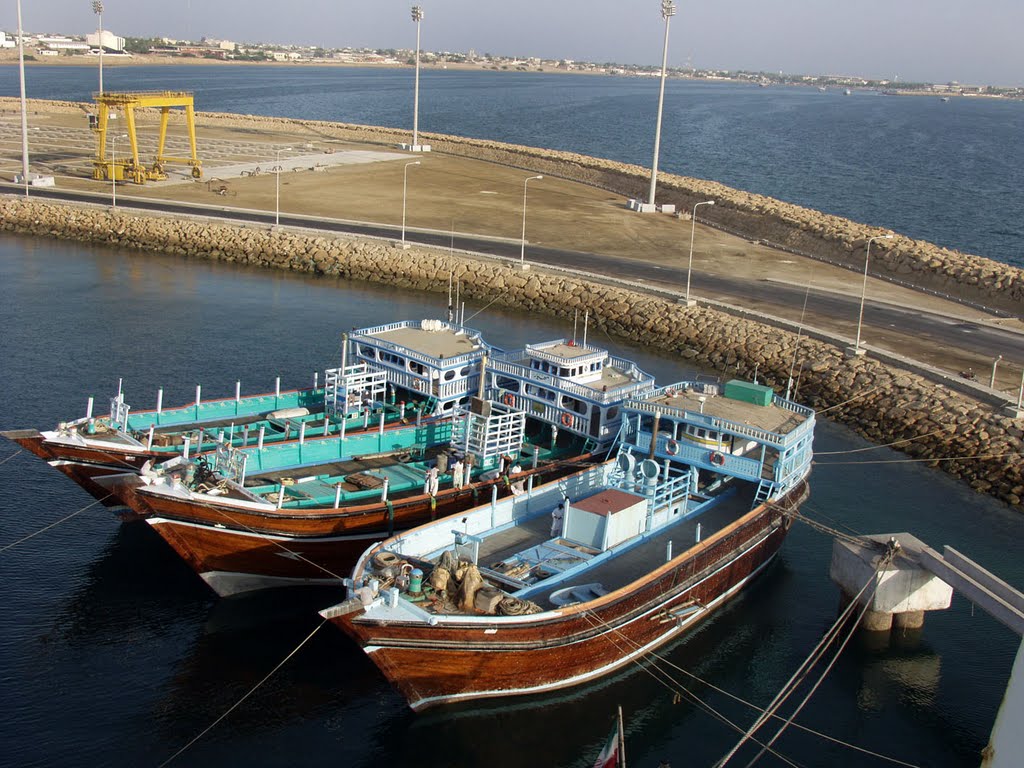
India and Iran are collaborating in developing the port of Chabahar, in which Afghanistan is also taking interest. This will open new venues for the international shipping industry. A report on this project –
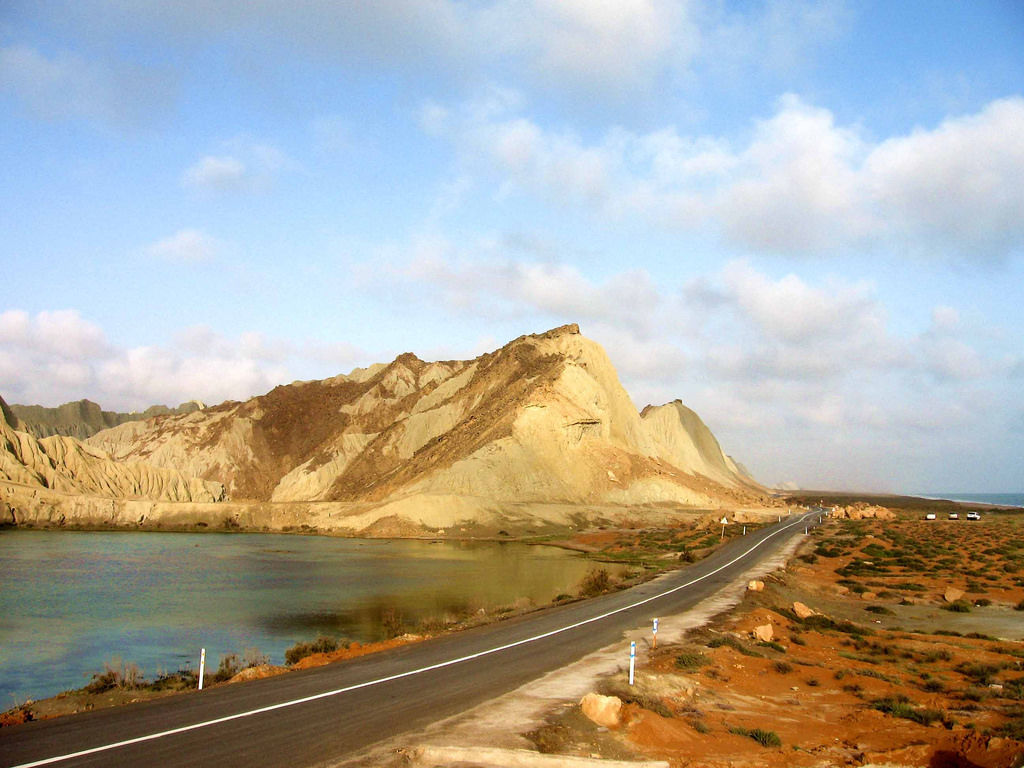
There are fears in the local circles that the impending US sanctions on Iran may adversely affect the fate of Chabahar port in which India has invested heavily, in order to find a route to Afghanistan. It is imperative for India to negotiate with the US to safeguards its commercial interests in Iran and Afghanistan.
India Ports Global Private Limited (IPGPL) managing director Arun Kumar Gupta was in Iran in early May to choose the local operator for managing the first phase of the Shahid Beheshti port as part of an interim arrangement. The first phase was completed in December. IPGPL is a joint venture between Jawaharlal Nehru Port Trust and Kandla Port Trust.
“We will finalise the local operator shortly and put in place an interim arrangement before June 16,” Shipping Secretary Gopal Krishna said.
However, the US has assured India that its sanctions on Iran will not impede the work on Chabahar. Delhi has already started supplying wheat to Afghanistan.
During his trip to Delhi in 2017, the US Secretary of State Rex Tillerson assured India that the US stands by the success of Delhi’s Chabahar port project.
India going Global in Transport Logistics
The Ministry of Road Transport and Highways (MoRTH) organised a roundtable discussion hosted by the US-India Business Council (USIBC), on the sidelines of the India Integrated Transport and Logistics Summit 2017 held in New Delhi. The discussion was attended by senior officials from MoRTH, Ministry of Shipping, the National Highways Authority of India (NHAI) and senior executives of more than 50 companies that included AECOM, Adani Group, Allcargo Logistics, Caterpillar, CHEP, Coca-Cola Company, FedEx Express, Honeywell, IL&FS, Indospace, Procter and Gamble and Walmart.
“Container transport capacity is of utmost importance in LPI listing, besides the presence of equipped rail facilities to load and discharge containers.”
–Deputy Minister of Iran for roads and urban development, Amir Amini
Sanjay Mitra, Secretary, Ministry for Road Transport and Highways highlighted the various initiatives being taken by the government in partnership with various countries to improve the transport infrastructure in the region such as development of Chabahar Port, multimodal logistics hub at Varanasi, Sahibganj and Haldia for easy transportation of goods into the North-Eastern states and Bangladesh. He said that there is a lot of scope for collaboration with the US in areas like logistics, alternate technology for road building, use of new machinery, trucking standards, fleet modernisation, safety features of vehicles and road safety standards.
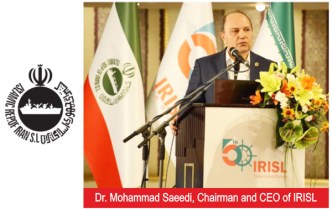
“Maritime transportation accounts for about 87 per cent of global trade. For Iran, the figure currently stands at 85 per cent.”
–CEO of Islamic Republic of Iran Shipping Lines Mohammad Saeedi
The Chabahar Port Project
The Iranian government has been collaborating with investors inside the country and abroad to develop the strategic Chabahar Port in the southeastern Sistan-Baluchestan Province along the Sea of Oman. This project will create a massive container port establishing links with the whole region with India and China.
India, Afghanistan and Iran signed a trilateral agreement last year to expand the port, with India committing invest $500 million and an Indian company signing an agreement to build hundreds of kilometers of railroads from the harbour into Iran.
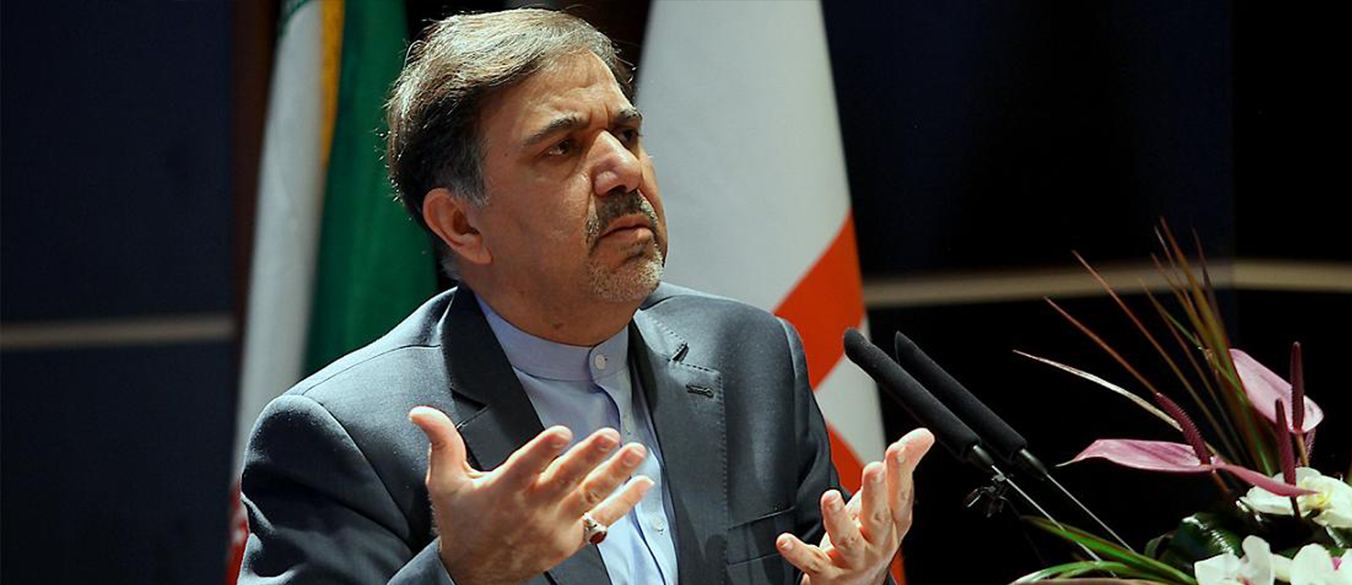
“Development of transportation infrastructures needs a $80 billion investment and there needs to be a shift of investment approach in organisations to international trade discourse.”
–The Minister of Road and Urban Development Abbas Akhoundi
Chabahar is close to the China-controlled Gwadar port in Balochistan of Pakistan. While Gwadar is a deep sea port, Chabahar needs to be developed to accommodate bigger ships.
Indian Ports Global, a joint venture between the Jawaharlal Nehru Port Trust and the Kandla Port is scheduled to develop two terminals and five multi-cargo berth in the first phase of the project. The port lacks last mile connectivity. India signed a deal to help develop a rail line from Chabahar to Zahedan, near the tri-point of Iran, Afghanistan and Pakistan, to connect Iranian railway.
Other ports, including those along the Persian Gulf and the Caspian Sea, have also seen an increase in the building activity to increase their capacity, following the signing of a landmark deal between Tehran and world powers a year earlier.
Close to 145 million tons of oil and non-oil goods were loaded and unloaded in Iranian ports in the last Iranian year (ended March 20, 2017), registering a 4.3 per cent rise compared to March 2013-14 when President Hassan Rouhani first came to power.
The ports handled 58.2 million TEU of containers last year, indicating a 162 per cent hike over March 2013-14 after a sharp fall to 1.2 million TEU registered in March 2014-15
Indo-Iranian collaboration and LPI indices
Iran has a long-term plan to recapture its position in international transport and is indulging in policies to realise this dream. This includes expansion of logistic parks and dry ports, development of harbours and inviting international airfreight forwarders to work inside the country. Iran aims to reach 75th position on the LPI by the end of the sixth five-year development plan 2017-22, Deputy Minister of roads and urban development, Amir Amini said.
By focusing on transportation development, Iran is planning to further improve its Logistics Performance Index ranking and continue the progress registered in 2016 when the World Bank listed the country at 96th place among 160 nations.
“India must leverage such opportunities – as investing in the Indo-Persian Chabahar port – and expand its presence in a competitive global market. Apart from giving us international strategic leverage, it will help improve the competence of various Indian players in the cargo sector.”
–G. Raghuram, Director, IIM Bangalore

In the World Bank’s biennial measure of international supply chain efficiency, called Logistics Performance Index, India’s ranking has jumped from 54 in 2014 to 35 in 2016. While Germany tops the 2016 rankings, India is ahead of countries such as Portugal and New Zealand, said the report titled Connecting to Compete: 2016 Trade Logistics in the Global Economy.
LPI is a World Bank’s bench marking tool that identifies countries on an index of how many challenges and opportunities they face in their trade logistics fields and what they can do to improve their performance on this index.
It is based on a worldwide survey of players on the ground of global freight forwarders and express carriers, who give feedback on the logistics conveniences of their countries in which they operate and those with which they trade. It measures performance along the logistics supply chain within a country and measures in two contexts: international and domestic.
The Logistics Performance Index analyses countries across six components: efficiency of customs and border management clearance, quality of trade and transport infrastructure, ease of arranging competitively priced shipments, competence and quality of logistics services, ability to track and trace consignments, and the frequency with which shipments reach consignees within scheduled or expected delivery times.
However, Logistics Performance Index does not measure how easy or difficult it is to move goods to the interiors. For that, World Bank has another index—a domestic LPI which analyses a country’s performance over four factors: infrastructure, services, border procedures and supply chain reliability.
While not all indices can be compared across countries, there are some which show that India still has to improve. For example, only 69 per cent of shipments from India meet the international quality criteria, compared to 72 per cent for China and 77 per cent for Kenya. Iran also has to improve a lot on these criteria. Thus, if both countries have to make Chabahar project a success, they need to look at their weaknesses as much as their improvements in this sector.
@Cosmopolitaneye 2025. For re-publishing, send email in the contact form.
 News and Opinions...